
Common challenges, shared solutions.

Let's talk about global change.
Rapid population growth — projected to reach approximately nine billion people by 2050 — combined with climate change and rising water demand, makes sustainable water resource management one of the central challenges of the 21st century. The seventh Forster Summer School at our Faculty from 02.07.-10.07.2026. explored Global water resources. Commun challenges, shared solutions.

29 students from our FORTHEM Alliance and ERASMUS+ partner universities University of Burgundy, University of Jyväskylä, University of Palermo, University of Valencia, Charles University, from our cooperation partner Sultan Quaboos University in Muscat, Oman, South Korean exchange students at JGU and JGU master’s program students participated in this international and interdisciplinary event.
Blended Intensive Program (BIP): virtual kick-off and physical mobility
As a short-term BIP the summer school included a virtual component and a physical mobility in Bad Homburg v.d. Höhe and at JGU Mainz. A varied program awaited the international students.
As part of the online lecture given on 15 June by Prof. Reinecke, Professor for Earth System Modelling, Institute of Geography, JGU Mainz, international students from a variety of academic backgrounds explored “Climate Change Impacts on the Global Water Cycle” from a physical geographic perspective. The talk, entitled “Too little and too much: Climate Change Impacts on the Global water Cycle”, provided insights into current research, followed by Q&A.
‘Water’ in theory and practice
The importance of water as the most valuable resource and the basis of life for humans, animals and plants was encountered and explored by the participants on various levels: in everyday life, during expert talks, on guided tours and in workshops.
During the opening weekend in Bad Homburg, they learnt about the history of the mineral springs, the drinking cures and the water tower – a landmark of Bad Homburg – as part of a scavenger hunt that had been devised in a thoroughly exciting and funny way by our student assistant Eva.


Lectures, talks and workshops
The topic was examined from interdisciplinary academic perspectives. In Bad Homburg, Prof. Toy (Institute of Geosciences, JGU Mainz) and her collaboration partner from Forthem Climate and Resources Lab, Prof. Patil (University of Jyväskylä/Helmholtz-Institute Freiberg), focused on water as a geological resource and mine wastewater contamination.


At JGU Mainz, the common challenges to shape a resilient and equitable “blue future” for people and nature worldwide were highlighted by discussing “Maritime Geographies/UN Ocean Decade” (Research Associate Laibach, Institute of Geography, JGU Mainz), “The Status of Global Water Resources 2025 and Data Management” (Dr. Dietrich from the UNESCO Centre for Water Resources and Global Change in Koblenz). Approaches to “Sustainable Wastewater Treatment and Nutrient Removal” were presented by Dr. Klavins (Researcher at National Centre of Forest and Water Research, Department of Environmental Science, University of Latvia, Riga), whilst Dr. Manyes Font (University of Valencia) gave insights into the PRIMA SWRIPS Project (Sustainable Wastewater Re-use with Innovative Purification and Sensing System for the Agrifood Supply Chain).


Particularly insightful was a workshop by Prof. Winz (Institute of Pharmaceutical and Biomedical Sciences, JGU Mainz) on analyzing drinking water samples, as well as water samples from lakes, rivers and the sea, which the international students had brought with them from their home countries.
By bringing together interdisciplinary perspectives, the program explored how global cooperation, scientific innovation, and shared responsibility can pave the way towards sustainable and equitable water futures.


Scientific excursions and guided tours
The theoretical contributions were supplemented by on-site visits to see practical applications. A tour of recent works to revitalize the natural state of the river Nidda in Frankfurt/Main, guided by Prof. Toy, highlighted urban waterways and positive impact of the project on water quality, biodiversity and flood protection. A scientific excursion to the sewage treatment plant in Oppenheim provided an insight into wastewater management and served as an enriching complement to the presentations by Dr. Klavins and Dr. Grimm, who conduct research in the field of drug residues and clean drinking water.


During a guided tour, the international students not only got to know the JGU campus, but also the BNE Escape Game House (Eng: ESD - Education for Sustainable Development) von Zukunft@uni-mainz and the Max Planck Institute for Polymer Research, including a visit to a laboratory in the Liquid Dynamics Research Group and information about the Max Planck Initiative for Liquid Research.
In addition, city tours focusing on heatwave strategies, stormwater and wastewater management in Bad Homburg, Mainz (by Geographie für Alle e.V.) and Oppenheim were on the program.


Internationality: culture, language, network
Forster Summer School combined the deepening of academic knowledge with linguistic and (inter)cultural learning – and provided space for new experiences and friendships. Language activities, creative group projects, barbecue, an international evening, public viewing, playing cards or just sharing experiences and highlights - all of this made the event a unique experience for the group and the organizers. We hope you’ll stay in touch!
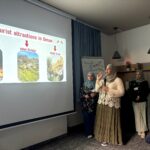
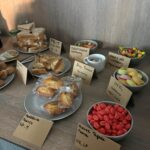
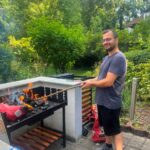
The Faculty 09 expressly thanks everyone who got involved in the BIP Forster Summer School 2026!
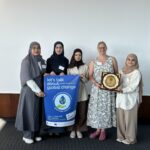
We’re looking forward to 2027 and can’t wait to see who’ll be joining us next year! 💙
Stay curious! 🔎